
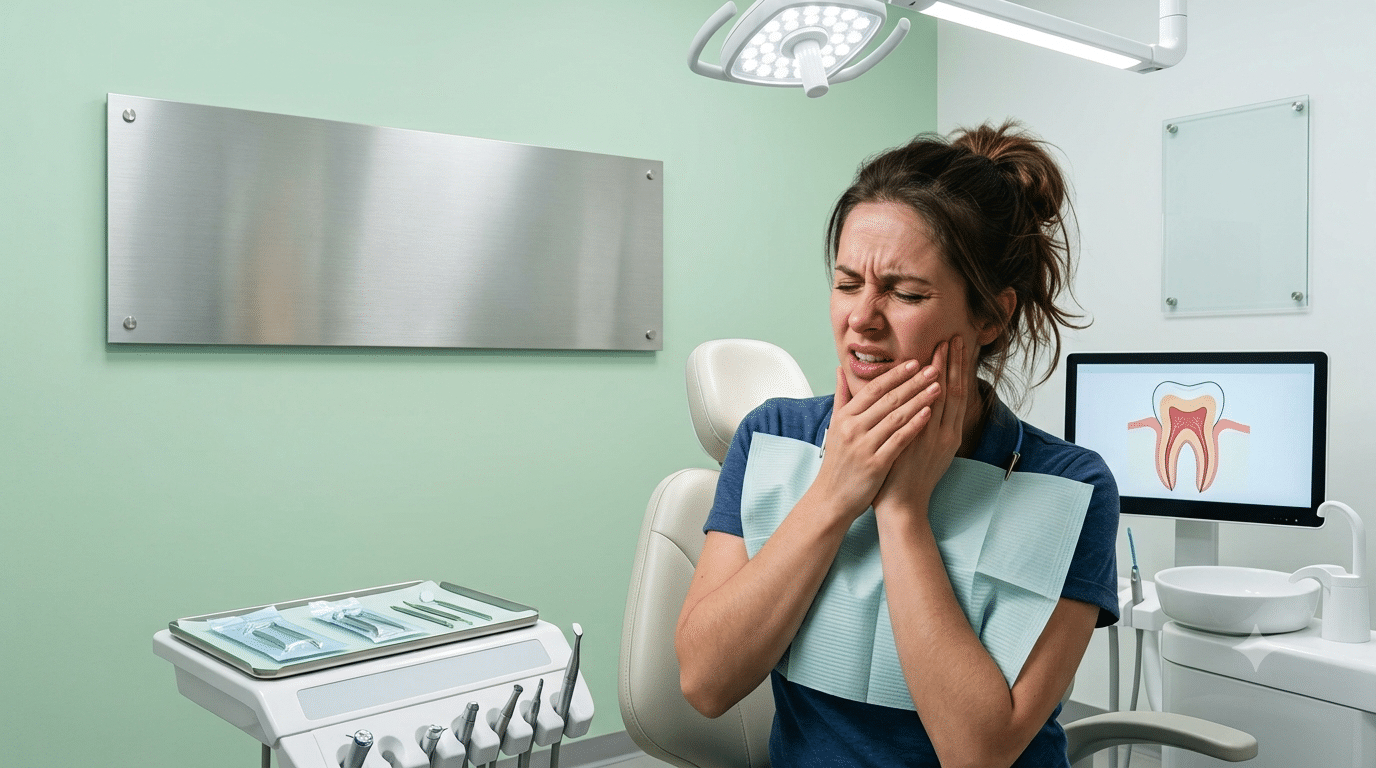
Severe Tooth Pain at Night? It Could Be More Than a Cavity
Tooth pain can be uncomfortable at any time, but severe tooth pain at night can make it hard to sleep, eat, or even focus on everyday activities. Many people think the pain is just a cavity and let it be, waiting for the pain to go away. Seeking the care of the Best Dental Clinic in Kottayam professionals can help discover the causes and solutions to tooth pain.
But sometimes, the pain can be severe or last long enough that the infection or damage has reached the inside pulp of the tooth, requiring a root canal to save the natural tooth.
Table of Contents
Why Does Tooth Pain Become Worse at Night?
5 Signs Your Tooth May Need a Root Canal
Why Is Saving the Natural Tooth Important?
Root Canal vs Filling vs Tooth Extraction
What Happens During a Root Canal?
Is Root Canal Treatment Painful?
What Should You Do After a Root Canal?
Choosing Root Canal Care in Kottayam
Conclusion
FAQ
Why Does Tooth Pain Become Worse at Night?
A tooth that is painful during the night may feel sharper, as distractions are limited when trying to sleep. In addition, the pain may be exacerbated due to the pressure applied to the tooth while lying down.
The discomfort may be intermittent at first, but it must not be ignored if it is constant. Furthermore, if the discomfort is accompanied by sensitivity, or if the chewing is painful or the tooth is swollen, it must be checked by a dentist.
5 Signs Your Tooth May Need a Root Canal
- Persistent toothache – There are cases where toothache is persistent and not due to a simple cavity. Sometimes toothaches can be caused by an inflamed or infected pulp.
- Severe tooth pain at night – If your tooth hurts severely at night, it should not be ignored.Night-time pain can be one of the signs that the tooth requires further evaluation.
- Sensitivity that lingers – In some cases, a dentist might need to examine the tooth because sensitivity that lingers might indicate a tooth condition.
- Swelling near the affected tooth – Infections can often lead to swelling around the tooth.It may be accompanied by discomfort, tenderness, or difficulty chewing
- Painful chewing – A dentist needs to check your teeth if you have a tooth condition that makes you unable to chew properly without pain.
Why Is Saving the Natural Tooth Important?
Whenever possible, your natural tooth is a better option than replacement. The root canal procedure involves the removal of the infected pulp from the tooth. The canals are then cleaned and disinfected before being sealed to prevent bacteria from entering.
A restoration such as a crown may be necessary to restore the tooth’s normal function.
Early treatment may also help prevent the infection from spreading and causing future problems.
Root Canal vs Filling vs Tooth Extraction
Choosing the right treatment depends on how severely the tooth has been affected.
Filling –A filling could be right for you if you have decay that has not reached the inner pulp of the tooth.
Root Canal – A root canal is a procedure that takes out the infected pulp from a tooth. It can sometimes be a good alternative to filling when decay reached the inner part of the tooth.
Extraction – Extraction is a removal of the tooth. As long as it is possible to save the natural tooth, it is better to do so, since saving the tooth can prevent potential complications while replacing it.
What Happens During a Root Canal?
A root canal is a procedure that removes infection from the tooth and protects the tooth from further damage. It generally has the following:
Diagnosis and X-rays – Digital imaging aids the dentist in comprehending the condition along with the anatomy of the tooth.
Local anaesthesia – The dentist will numb the area so that the patient will feel no pain during the treatment.
Removal of the infected pulp – The dentist will remove the infected or damaged tissue from the tooth.
Cleaning and shaping – Cleaning and shaping the tooth canals with suitable instruments.
Sealing the canals – The cleaned canals are sealed to prevent any bacteria from entering into the tooth.
Restoration – The dentist might advise a crown to restore the tooth to its normal function and protection.
Depending on the condition of the tooth, the root canal treatments are completed in one or more visits.
Is Root Canal Treatment Painful?
The thought of a root canal fills many patients with dread, especially when they are already in excruciating pain. Luckily, contemporary methods allow for numbing the treated tooth with local anaesthesia so that the intervention becomes relatively comfortable. Moreover, state-of-the-art technology enables dentists to perform all necessary steps with increased precision and ease. Most of the time, the procedure is designed to extract the source of pain, not cause more.
What Should You Do After a Root Canal?
Taking care of the treated tooth is important in order to maintain the result. Your dentist may recommend:
Following all post-treatment instructions
Maintaining regular brushing and flossing
Avoiding excessive pressure on the tooth until it is fully restored
Getting a recommended crown or restoration when required
Attending follow-up appointments
Maintaining regular dental checkups
A root canal treats the infection inside the tooth, but good oral hygiene is still essential in order to protect the treated tooth and the rest of your smile.
Choosing Root Canal Care in Kottayam
If you have severe toothaches and cannot sleep at night, it is best to get to a dental clinic immediately. Otherwise, the trouble may become more complicated than it needs to be. A proper inspection by dental experts can reveal whether the tooth needs filling, root canal or any other treatment.
So if you are looking for root canal treatment in Kottayam, you should find a clinic where your tooth will be carefully examined, and the best treatment will be chosen according to its current state.
For people who want root canal treatment service, an accurate diagnosis, proper treatment planning and careful post-treatment inspection can ease the process considerably.
Conclusion
Severe tooth pain at night could be a sign of extensive tooth decay or an infection which requires immediate treatment. It is crucial to look out for any signs and visit a dentist to get the most effective treatment and avoid losing the tooth. If you are having severe toothaches, it is essential to seek medical help to get your teeth examined and treated.