
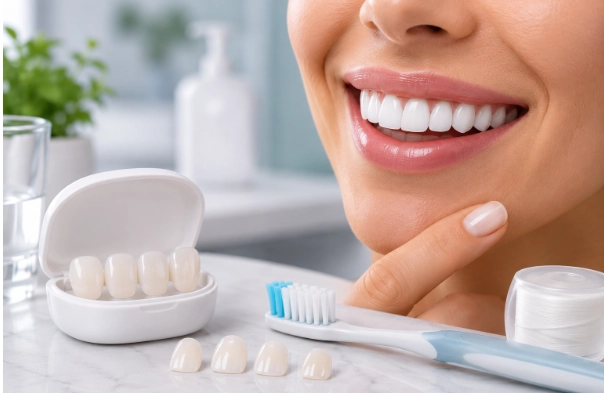
How to Care for Your Dental Veneers for Long-Lasting Results
Teeth that are damaged, stained, worn out or distorted may pose challenges not only in terms of their functioning but also in terms of aesthetics. One of the treatment options for such teeth is to undergo cosmetic crowns which aim at restoring the appearance and functionality of the tooth.
Dental crowns are caps that cover the top part of a tooth in order to provide protection and to improve the look and function of a tooth. Depending on the state of the tooth, a crown may be used to solve various problems such as fillings, cracked teeth, severe discoloration, worn out and decayed teeth.
In case you are looking for cosmetic crown treatment in Kottayam, knowing more about the procedure, advantages and other aspects may be useful.
Table of Contents
- Why Proper Veneer Care Matters
- Daily Brushing for Veneer Care
- Clean Between Your Teeth Every Day
- Choose the Right Oral Hygiene Products
- Avoid Biting Hard Objects
- Be Careful With Staining Foods and Drinks
- Protect Your Veneers From Teeth Grinding
- Maintain Regular Dental Check-Ups
- Take Care of Your Gums
- What to Do If a Veneer Feels Loose or Damaged
- Habits That Can Damage Veneers
- How Long Can Veneers Last?
- Maintaining Your Natural Teeth Alongside Veneers
- Conclusion
- FAQ
1. Why Proper Veneer Care Matters
Veneers are bonded to the front surface of suitable teeth to improve their appearance. While they are designed to withstand normal daily activities, they are not indestructible.
Proper maintenance can help:
- Preserve the appearance of your veneers
- Keep your natural teeth healthy
- Protect the surrounding gums
- Reduce the risk of plaque accumulation
- Prevent avoidable damage
- Maintain a comfortable bite
- Extend the functional lifespan of the restoration
Good veneer care should therefore be considered part of your everyday oral hygiene routine.
2. Daily Brushing for Veneer Care
Daily brushing is one of the most crucial procedures in caring for your veneers as well as the surrounding teeth. Make sure you use a soft-bristled brush and fluoride-based toothpaste. Always brush carefully and avoid placing too much pressure on the gums.
Recommended brushing routine
- Brush in the morning.
- Brush before going to bed.
- Use gentle circular movements.
- Clean the front, back, and chewing surfaces of your teeth.
- Pay attention to the gumline.
- Replace your toothbrush or toothbrush head regularly.
Aggressive brushing can contribute to gum recession and may expose the areas around your veneers, so gentle technique is important.
3. Clean Between Your Teeth Every Day
Even though you brush on a regular basis, food particles and plaque can build up between your teeth. Flossing between your teeth will help to keep the gums as well as the natural teeth surrounding your veneers safe. Depending on your needs, your dentist may recommend:
- Dental floss
- Interdental brushes
- Water flossers
- Other specialised cleaning aids
In flossing, you should not snap the floss against your gums. You just have to glide the floss gently between the teeth. Proper dental flossing is crucial as healthy gums play an important role in having healthy and beautiful smiles.
4. Choose the Right Oral Hygiene Products
Not all oral care products are good for everyone. In case of veneers, it will be appropriate to heed the advice of your dentist. Soft-bristled brush along with the right toothpaste is capable of cleaning the teeth without causing abrasions. Do not use any hard or highly abrasive products unless advised by a dental specialist. In case you are confused as to which toothpaste, toothbrush, mouth rinse or other cleaning device should be used, do consult your dentist.
5. Avoid Biting Hard Objects
One of the easiest ways to damage a veneer is by using your teeth to bite or open objects. Avoid habits such as:
- Biting pens or pencils
- Opening packages with your teeth
- Chewing ice
- Biting fingernails
- Biting very hard objects
- Using your front teeth to break hard materials
These habits can place unnecessary stress on veneers and natural teeth. Even though veneers are designed for normal chewing, they should not be treated as tools for cutting or opening objects.
6. Be Careful With Staining Foods and Drinks
Some foods and beverages can contribute to staining of natural teeth and may affect the appearance of the overall smile. Common examples include:
- Coffee
- Tea
- Red wine
- Cola and other dark beverages
- Certain sauces
- Tobacco products
Although many veneers have been designed to resist stains, the surrounding natural teeth may become discolored due to age and time. Taking good care of one’s oral hygiene and limiting exposure to staining items can help maintain a uniform appearance. If one consumes staining drinks regularly, rinsing his/her mouth with water can be helpful.
7. Protect Your Veneers From Teeth Grinding
Teeth grinding and clenching can place significant pressure on both natural teeth and dental restorations. Some people grind their teeth during sleep without realising it. Signs may include:
- Jaw discomfort
- Morning headaches
- Worn teeth
- Tooth sensitivity
- Facial muscle soreness
- Chipped or damaged restorations
If you grind or clench your teeth, inform your dentist. The use of a night guard recommended by the dentist will be useful for protecting your teeth and veneers against excess force. Do not buy or use any kind of dental appliance without professional assistance if there is any problem with your bite or restoration.
8. Maintain Regular Dental Check-Ups
Regular dental visits are essential even after your veneer treatment has been completed. During a dental check-up, your dentist can evaluate:
- Veneer condition
- Tooth health
- Gum health
- Bite
- Plaque accumulation
- Signs of decay
- Possible damage or wear
Professional cleaning can also help remove any plaque and build-up that regular brushing may not be able to address fully. Routine check-ups enable the discovery of any problems that could arise in future.
9. Take Care of Your Gums
Healthy gums are an important part of maintaining an attractive smile. Poor oral hygiene can cause plaque buildup around the gumline, which may result in inflammation, bleeding, bad breath, or gum disease. To support healthy gums:
- Brush gently twice a day.
- Clean between your teeth daily.
- Do not ignore bleeding gums.
- Avoid tobacco.
- Attend regular dental examinations.
- Seek professional advice if you notice persistent swelling or discomfort.
If your gums begin to recede, the edges of veneers may become more noticeable, making proper gum care particularly important.
10. What to Do If a Veneer Feels Loose or Damaged
If a veneer becomes loose, chipped, cracked, or detached, contact your dentist as soon as possible.
Until you receive professional care:
- Avoid chewing hard foods with the affected tooth.
- Do not attempt to permanently glue the veneer back yourself.
- Keep the area clean.
- Save the veneer if it has completely come off.
- Contact your dental clinic for an assessment.
Trying to repair a veneer using household adhesives can damage the tooth and create additional complications.
11. Habits That Can Damage Veneers
Some everyday habits may shorten the functional lifespan of veneers. Avoid:
Chewing ice:6
Hard ice can place excessive force on teeth and restorations.
Nail biting:
This can place repeated pressure on the front teeth.
Using teeth as tools:
Opening packages or cutting objects with your teeth can cause damage.
Excessive force while brushing:
Aggressive brushing can affect the gums and surrounding tooth structure.
Ignoring dental problems:
Untreated gum disease, decay, or bite problems can affect the long-term success of your veneers.
Smoking and tobacco use:
Tobacco can negatively affect gum health and overall oral health.
12. How Long Can Veneers Last?
The life span of the veneers is dependent on various conditions and can differ for each individual.
Maintenance of veneers can ensure their longevity.
However, veneers may need repair or even replacement after some time because of normal wear and tear, breakage, deterioration of the underlying tooth structure, or any other dental problems.
The condition of your veneers can be assessed by the dentist during routine check-ups.
13. Maintaining Your Natural Teeth Alongside Veneers
It should also be noted that veneers do not substitute for your entire oral hygiene regimen. Even the teeth behind a veneer need to be kept clean. The veneer will not get cavities because it is not real tooth material. However, the actual tooth behind the veneer may still be vulnerable to cavity-causing plaque and bacteria.
A long-term smile care routine should therefore include:
- Twice-daily brushing
- Daily interdental cleaning
- A balanced diet
- Adequate hydration
- Regular dental check-ups
- Professional cleaning when required
- Protection against teeth grinding
- Avoidance of damaging habits
If you are considering dental veneers in Kottayam, discuss your oral health, expectations, and maintenance requirements with a qualified dental professional before treatment.
14. Conclusion
Veneers can help you achieve a beautiful smile with proper maintenance. Some of the ways through which you can ensure your success include brushing your teeth gently two times a day, flossing, avoiding abrasive materials, protection from grinding, taking care of your gums, visiting the dentist regularly, among others.
It should be known that veneers do not take care of your teeth or gums, and the teeth and gums around your veneers should be taken care of as well.
If you wish to seek dental veneers services in Kottayam, consulting a professional can guide you on how to treat yourself properly.